

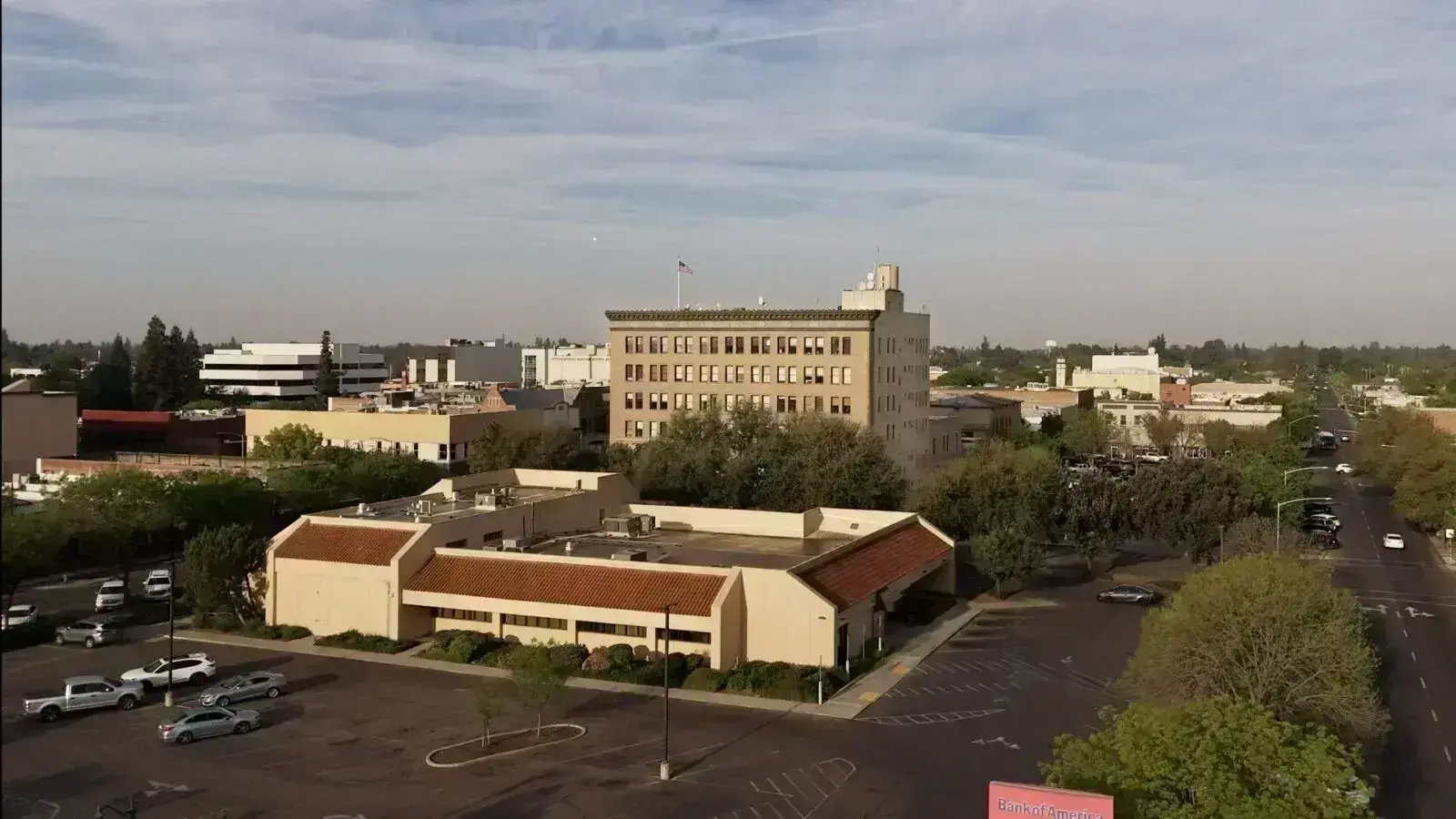
Visalia has always had an interesting relationship with the landscape around it.
Long before today’s neighborhoods, shopping districts, and residential communities took shape, the area was known as Four Creeks, a place influenced by waterways flowing west from the Sierra Nevada and an extensive landscape of native oaks.
Today, Visalia has grown into one of the Central Valley’s most established communities, but that relationship between home, landscape, agriculture, trees, and the nearby Sierra is still part of what gives the city its character.
You can see it in older neighborhoods shaded by mature trees.
You can see it in the agricultural land surrounding the city.
You can see it in established homes near the center of town and in the new neighborhoods expanding around Visalia’s edges.
And you can see it in the way people here use their homes.
At Terra Landscape Collection, we believe those local influences matter.
Landscape design shouldn’t begin with a collection of trendy features. It should begin with the home, the property, the neighborhood, and the people who will actually live there.
The result should feel like it belongs.
Visalia Has Always Been Connected to Trees and Waterways
One of the more interesting pieces of Visalia’s history is that the area was once known as Four Creeks.
Waterways coming from the Sierra Nevada helped create a landscape that historically supported extensive oak woodland.
That’s worth remembering when thinking about modern Visalia landscape design.
Trees aren’t simply decoration.
On many of Visalia’s most attractive established properties, mature trees provide much of the character. They frame homes, create outdoor rooms, define streets, soften architecture, and give neighborhoods the sense that they have been there for generations.
When renovating an established Visalia property, one of our first questions should therefore be:
What is already here that’s worth preserving?
A mature tree may have taken decades to become what it is today.
Instead of designing around a completely blank slate, an existing tree can become the starting point for an entirely new outdoor environment.
A patio might wrap around it.
A pathway could lead toward it.
A seating area might be positioned beneath it.
Landscape lighting can transform it into a nighttime focal point.
Sometimes the most valuable element of a new landscape is something that was already growing there.
Designing Around Visalia’s Established Neighborhoods
Visalia isn’t one type of neighborhood.
That’s part of what makes landscape design here interesting.
There are older areas closer to downtown, established residential neighborhoods with mature landscapes, mid-century homes, larger custom properties, newer subdivisions, and continued residential growth around the edges of the city.
Each requires a different approach.
An older home might benefit from preserving mature planting and working with existing architecture.
A mid-century property might call for simpler geometry, stronger architectural planting, and a landscape that reinforces the lines of the house.
A traditional home could support a softer, layered landscape.
A newer home may provide an opportunity to create the entire outdoor environment from the beginning.
The landscape should respond to the architecture rather than compete with it.
Downtown Visalia Shows Why Character Matters
Downtown Visalia has something that can’t simply be recreated overnight: history.
Buildings, trees, sidewalks, gathering places, restaurants, shops, and public spaces have developed together over time.
Residential landscapes benefit from that same idea.
A backyard becomes more interesting when it feels layered rather than assembled.
Trees establish the larger structure.
Patios and walkways establish movement.
Planting softens architecture.
Outdoor structures create destinations.
Lighting changes how the space feels after sunset.
Furniture and personal details make it feel lived in.
Good landscape design isn’t necessarily about installing more things.
It’s about making the different pieces feel like they have always belonged together.
Visalia Is Growing
While Visalia has strong historic roots, it is also a growing city.
New residential construction is changing portions of the community, particularly around expanding areas of Visalia where new homes, streets, parks, schools, shopping, and other development are reshaping what was previously agricultural land.
That growth creates an important opportunity for landscape design.
A newly built house may be complete on move-in day.
The property usually isn’t.
The backyard is where homeowners have an opportunity to begin creating something much more personal.
New Home Communities in Visalia
Visalia currently has a significant selection of new residential construction, ranging from more compact homes to larger properties.
Communities currently represented in the new-home market include areas such as:
Huckleberry Park
Wildflower
Cross Creek Bend
Ariette at Oak Place
Madison at Oak Place
Higgins Ranch
and other new residential developments throughout the Visalia area.
There is also additional residential development moving through the planning process.
That means today’s Visalia landscape isn’t only about renovating established homes.
It’s also about helping a new generation of homeowners turn newly constructed houses into complete properties.
Landscaping a New Visalia Home
Buying a new home presents an unusual opportunity.
You get to think about the landscape before decades of unrelated improvements accumulate.
Instead of starting with:
“Where should we put some plants?”
Start with:
“How do we want to live here?”
Do you entertain?
Do you have children?
Pets?
Do you cook outside?
Would you use a pool?
Do you want a garden?
Would you enjoy sitting outside in the morning?
Do you host family gatherings?
Would you rather have one large entertainment area or several smaller outdoor spaces?
Those answers should shape the landscape.
Start With a Plan Before You Start With Concrete
One of the easiest mistakes with a new backyard is building the first thing that seems necessary without thinking about what might come later.
The homeowner pours a patio.
A year later they decide they want an outdoor kitchen.
Then they want a patio cover.
Several years later they consider a pool.
Suddenly the original patio is in the wrong location.
Utilities need to be moved.
Access is difficult.
Drainage needs to change.
Trees are where the pool equipment needs to go.
A complete landscape design helps prevent this.
Everything doesn’t have to be constructed immediately.
But knowing the eventual direction of the property can make every phase smarter.
New Visalia Neighborhoods Can Become More Personal Through Landscape
New residential communities naturally begin with a certain amount of repetition.
Homes may share similar architecture.
Fences may look alike.
Lots may have similar dimensions.
Young trees haven’t had time to establish themselves.
Landscape is one of the strongest opportunities homeowners have to give those properties an individual identity.
One family might create a contemporary pool environment.
Another might build an outdoor kitchen and covered dining area.
Another could prioritize gardens, citrus trees, lawn, and places for children to play.
Another might prefer a quieter landscape centered around trees, planting, a fire feature, and intimate seating areas.
The house may have started with a builder’s floor plan.
The outdoor environment doesn’t have to.
Clements Ranch and Visalia’s Next Generation of Neighborhoods
Visalia’s residential growth isn’t finished.
One example is the proposed Clements Ranch development, which represents the scale of housing being considered as the city continues expanding.
Plans for the project contemplate a mixture of residential types, including single-family neighborhoods and higher-density housing.
Development on that scale does more than add houses.
Over time, it creates new streets, new patterns of movement, new neighborhood landscapes, and thousands of individual outdoor spaces.
For landscape designers, builders, and homeowners, this raises an important question:
What will these neighborhoods feel like twenty years from now?
The answer depends partly on decisions being made when they’re new.
Trees planted today eventually establish the canopy.
Front landscapes influence the character of streets.
Backyards become gathering spaces.
Outdoor improvements personalize homes.
The landscape is what helps a new neighborhood eventually feel established.
Designing the Visalia Backyard as a Series of Outdoor Rooms
One large backyard doesn’t have to remain one large open space.
We like to think about outdoor environments as a collection of rooms.
There might be a dining room.
A kitchen.
A lounge.
A pool area.
A garden.
A play space.
A fire-side gathering area.
The difference is that the walls are created by planting, trees, structures, pathways, changes in materials, and views.
This can make a Visalia backyard feel considerably larger and more interesting.
The Outdoor Dining Room
Outdoor dining doesn’t require an enormous structure.
Sometimes a well-positioned table beneath a patio cover or tree is enough to establish a destination.
The important questions are practical.
How far is it from the indoor kitchen?
What does someone see while sitting there?
Is it comfortable?
Can guests move through the space without interfering with cooking?
Does it connect naturally with the rest of the backyard?
Small decisions can make the difference between an outdoor dining area that looks attractive and one that gets used constantly.
The Outdoor Kitchen
For homeowners who enjoy entertaining, the outdoor kitchen can become one of the most active parts of the landscape.
That might mean a simple built-in barbecue with preparation space and storage.
Or it could become a more complete cooking environment with refrigeration, sinks, burners, pizza ovens, bar seating, televisions, and substantial counter space.
The design should reflect the homeowner.
Someone who grills dinner twice a week needs something different from someone who regularly hosts thirty people.
The Pool as Part of the Landscape
A pool shouldn’t feel like it was dropped into the middle of the backyard.
It should belong to the larger composition.
Planting can soften fencing.
Trees can establish scale.
A spa can create another visual element.
A covered patio can provide a comfortable transition from the house.
An outdoor kitchen can support entertaining.
A fire feature can give the area a purpose when nobody is swimming.
Lighting can completely change the experience after sunset.
When the pool and landscape are designed together, the result feels much more like an outdoor environment than a swimming pool surrounded by paving.
Gardens Can Bring Visalia’s Agricultural Story Home
Visalia is surrounded by one of the most productive agricultural regions in the world.
That connection to agriculture doesn’t have to stop at the edge of town.
Fruit trees, herbs, vegetables, vines, and edible plants can become beautiful parts of a residential landscape.
A citrus tree can be both architectural and productive.
Several fruit trees might create a small orchard.
Raised garden beds can become attractive features rather than hidden utility areas.
Herbs can grow near an outdoor kitchen.
Grapevines can cover a trellis.
The idea isn’t to turn every backyard into a farm.
It’s to create landscapes that provide something beyond appearance.
A garden gives people another reason to interact with the property.
Trees Can Define a Visalia Property
Few landscape decisions have a greater long-term impact than tree placement.
Trees establish scale.
They create canopy.
They frame architecture.
They help create privacy.
They provide a visual backdrop.
And as they mature, they can make a newer property feel increasingly established.
This is particularly important in Visalia’s new neighborhoods.
The small tree planted when a family moves into a new home may eventually become one of the defining features of the property.
That means trees should be selected and positioned with their mature size in mind, not simply based on how they look on installation day.
Create Privacy Without Hiding the Entire Property
Privacy matters in both established and new neighborhoods.
But privacy doesn’t necessarily require surrounding the backyard with a solid visual wall.
Trees can screen upper-story windows.
Layered planting can soften fences.
Trellises can block specific sightlines.
Outdoor structures can make gathering areas feel more intimate.
Walls can define spaces without enclosing the entire yard.
Good privacy design is selective.
Block what needs to be blocked.
Preserve what deserves to remain open.
Outdoor Structures Can Extend the Architecture
A patio cover, pavilion, pergola, or outdoor room can become one of the largest architectural features in the backyard.
It should feel connected to the house.
Materials matter.
Proportion matters.
Rooflines matter.
Sightlines from inside the house matter.
When these elements are considered carefully, an outdoor structure can make the home itself feel larger because living space visually extends beyond the interior walls.
It might become an outdoor dining room.
A kitchen.
A lounge.
A place to watch a game.
Or simply the place where everyone ends up during a family gathering.
Fire Features Give the Landscape Another Destination
A fire feature can create an entirely different outdoor room.
Place it away from the main patio and suddenly there’s a reason to move farther into the backyard.
A pathway leads somewhere.
Planting frames the destination.
Landscape lighting guides the way.
The fire becomes the center of a second gathering space.
This is one of the simplest ways to make a larger backyard feel like a complete environment rather than a patio surrounded by unused space.
Landscape Lighting Creates a Second Landscape
One of our favorite things about landscape lighting is that it allows the same property to have two personalities.
During the day, you experience the plants, architecture, materials, and views.
At night, light determines what you see.
A mature tree can become dramatic.
Stone develops texture.
A pathway becomes a line through the garden.
A pool becomes reflective.
Planting that seemed subtle during the day can become the backdrop for an outdoor room.
Good landscape lighting isn’t about illuminating everything.
It’s about deciding what deserves to be seen.
Front Yards Shape Visalia’s Neighborhoods
Backyards tend to receive most of the attention, but front landscapes collectively determine much of the character of a neighborhood.
Trees are particularly important.
Look at established Visalia streets and compare them with a brand-new subdivision.
The difference isn’t simply the age of the houses.
It’s the landscape.
Mature trees, established planting, personalized walkways, gardens, walls, and other details create a sense of permanence.
Today’s new Visalia neighborhoods will eventually develop that same character.
The landscapes homeowners create now will become part of what those neighborhoods look like decades from today.
Landscape Design for Established Visalia Homes
Renovating an older property presents opportunities that don’t exist with new construction.
You may already have mature trees.
There may be established garden areas.
An older patio may have good proportions but dated materials.
The architecture may have details worth highlighting.
Instead of automatically removing everything, we like to identify what already works.
Then the landscape can evolve around it.
An old patio might become the foundation for a new outdoor room.
A mature tree could anchor an entirely redesigned garden.
A side yard could become a courtyard.
An unused corner might become a fire-side gathering space.
Renovation is often about discovering possibilities that were already there.
The Sierra Is Part of Visalia’s Identity
Visalia is often described as a gateway to Sequoia and Kings Canyon National Parks, and the Sierra Nevada has always influenced the region.
Even when the mountains aren’t visible from the backyard, that relationship with the Sierra contributes to the outdoor identity of the community.
Natural materials, substantial trees, stone, wood, layered planting, and landscapes designed for gathering can draw from that broader regional character without trying to recreate a mountain landscape.
For some properties, preserving eastern views may also become part of the design.
A landscape doesn’t always have to be the view.
Sometimes its job is to frame one.
A Visalia Landscape Should Feel Personal
There isn’t one correct Visalia landscape style.
That’s what makes designing here interesting.
A contemporary home in a new community may call for clean architectural planting, a pool, and structured outdoor spaces.
An established home might benefit from mature trees and softer planting.
A larger property could include gardens, fruit trees, lawn, outdoor cooking, a pool, and multiple gathering areas.
A smaller backyard might become an intimate courtyard with beautiful planting, a fire feature, and carefully considered lighting.
The design should begin with the people living there.
Not with a checklist.
From New Construction to Established Visalia Homes
Visalia’s landscape is changing.
New communities such as Huckleberry Park, Wildflower, Cross Creek Bend, Ariette at Oak Place, Madison at Oak Place, Higgins Ranch, and other residential developments are adding homes around the city.
At the same time, established Visalia neighborhoods continue to evolve as homeowners renovate properties and rethink outdoor spaces that may have been built decades ago.
Both situations present opportunities.
A new home offers a blank canvas.
An established home offers history.
The job of landscape design is to understand what makes each property worth building upon.
Terra Landscape Collection and Visalia
At Terra Landscape Collection, we approach landscape design as something larger than choosing plants or installing individual backyard features.
We look at the house.
The architecture.
The existing landscape.
The surrounding neighborhood.
Views.
Outdoor living.
And the people who will actually use the property.
Then those elements begin coming together as one environment.
For a new Visalia homeowner, that may mean developing a complete landscape plan before construction begins.
For an established homeowner, it might mean discovering how an existing property can become something entirely different without losing the character that makes it special.
The finished landscape should feel intentional.
But it should also feel comfortable.
It should feel like home.
Discover More Landscape Design Across Tulare County
Visalia is only one part of Tulare County’s landscape story.
Porterville sits closer to the Tule River, Lake Success, and the Sierra foothills.
Exeter has its citrus heritage and distinctive small-town character.
Lindsay has its own agricultural identity.
Springville marks the transition toward a true foothill environment.
Three Rivers is shaped by the Kaweah River and its relationship with Sequoia National Park.
Tulare, Dinuba, and the communities throughout the Valley each have their own homes, neighborhoods, history, and outdoor lifestyle.
That’s why Terra Landscape Collection is developing the Tulare County Landscaping Guide.
Instead of creating interchangeable city pages, we’re exploring what makes each community different and how those differences can inspire better outdoor environments.
Explore the Tulare County Landscaping Guide to discover landscape design ideas, communities, outdoor living inspiration, and Terra projects throughout Visalia and the greater Tulare County region.
Planning a Landscape Project in Visalia?
Whether you’ve purchased a home in one of Visalia’s growing new communities, are renovating an established property, or are finally ready to rethink a backyard you’ve lived with for years, start by looking at the entire property.
Think about how you want to live there.
Think about what should be preserved.
Think about what the landscape will look like five, ten, or twenty years from now.
And think about how the outdoor environment can become as thoughtfully considered as the home itself.
Terra Landscape Collection can help transform those ideas into a Visalia landscape designed around your home, your property, and the way you want to live outside.